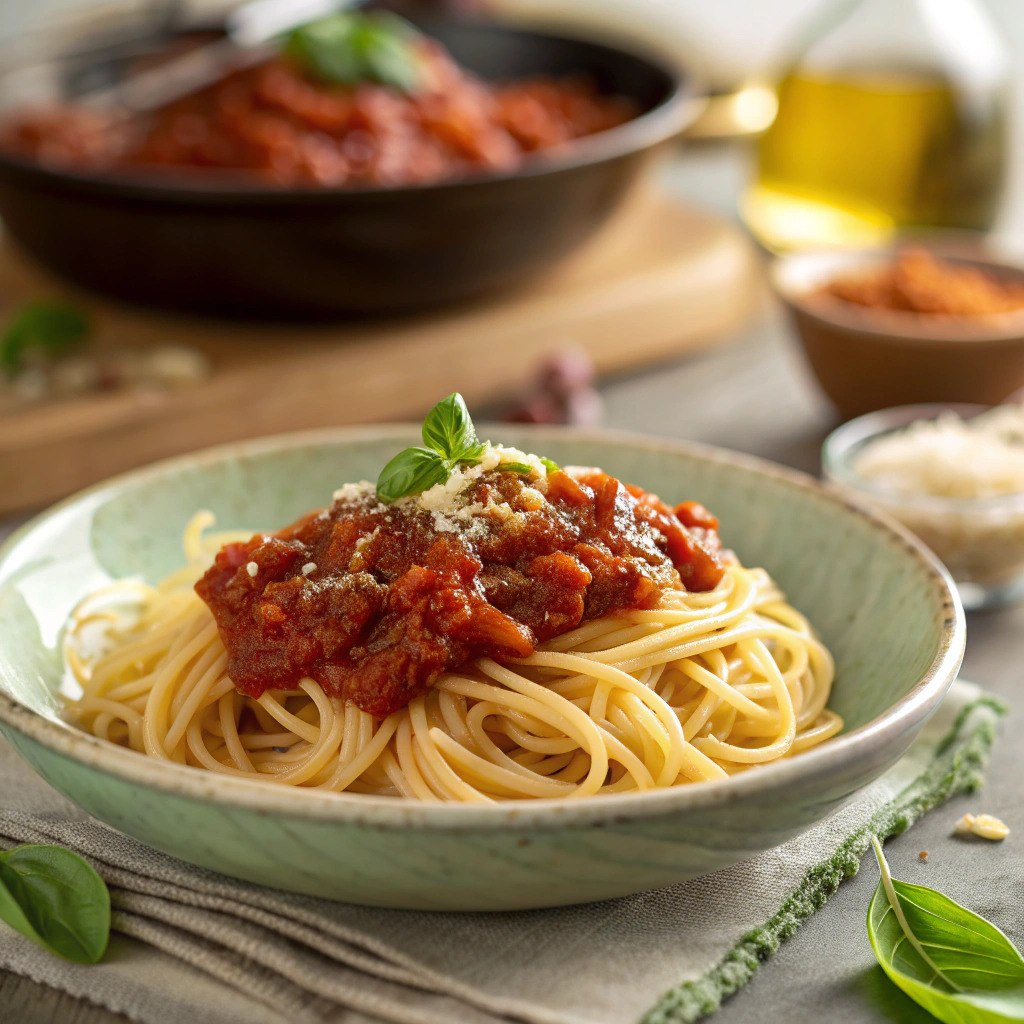
Indulge in the rich, homemade taste of authentic pasta sauce that elevates any dish. This sauce is not just a recipe; it\’s a culinary experience that brings warmth and comfort to your table.

How This Became My Go-To
Creating a homemade pasta sauce is a labor of love that pays off with every delicious bite. This sauce captures the essence of traditional Italian cooking, allowing fresh ingredients to shine through. By using ripe tomatoes, aromatic herbs, and quality olive oil, the result is a sauce that is both robust and flavorful. The beauty of this recipe lies in its simplicity and the ability to customize it to your taste. Whether served over spaghetti, used in lasagna, or incorporated in other dishes, this sauce is sure to impress.
What makes this sauce truly special is the slow cooking process that allows the flavors to meld beautifully, creating a rich depth that store-bought sauces simply cannot replicate. With a few fresh ingredients and minimal effort, you can create a sauce that tastes like it came straight from an Italian kitchen. Prepare to fill your home with the inviting aroma of simmering tomatoes and herbs, as you create a sauce that will become a staple in your culinary repertoire.
Tool Talk
To prepare this sauce, you will need a few essential pieces of equipment that will streamline your cooking process.
- A large pot for simmering the sauce
- A cutting board for chopping vegetables
- A sharp knife for easy slicing
- A wooden spoon for stirring
- A blender or immersion blender for achieving a smooth consistency, if desired. Having these tools on hand will ensure that you can focus on creating a delicious homemade pasta sauce without any interruptions.
Secrets I've Discovered Along the Way
For the best flavor, always use fresh, ripe tomatoes when in season, or opt for high-quality canned tomatoes when they are not available. Cooking the sauce slowly allows the flavors to develop, so don’t rush the process. For added depth, consider sautéing onions and garlic in olive oil before adding the tomatoes. Always taste and adjust the seasoning with salt, pepper, and herbs like basil and oregano throughout the cooking process. Food safety is crucial; always wash your hands before handling ingredients and ensure that any utensils or surfaces that come into contact with raw ingredients are thoroughly cleaned. Leftover sauce can be stored in an airtight container in the refrigerator for up to a week or can be frozen for later use.
Recipe Card

Ingredients
- 2 cans whole peeled tomatoes (preferably San Marzano)
- 1 large onion (finely chopped)
- 4 garlic cloves (minced)
- 1/4 cup olive oil (extra virgin is best)
- 1 tablespoon dried oregano
- 1 tablespoon fresh basil (or 1 teaspoon dried)
- salt to taste
- black pepper to taste
- 1 teaspoon sugar (optional, to balance acidity)
Instructions
- In a large pot, heat the olive oil over medium heat. Add the chopped onion and sauté until translucent, about five minutes.
- Stir in the minced garlic and cook for an additional minute until fragrant. Be careful not to burn the garlic.
- Add the canned tomatoes, breaking them up with a spoon if necessary. Stir in the oregano, basil, salt, and pepper.
- Bring the mixture to a simmer, then reduce the heat to low. Allow the sauce to cook gently for at least 30 minutes, stirring occasionally.
- Taste and adjust seasoning as needed. If using, stir in sugar to reduce acidity.
- Continue to simmer for an additional 15 to 30 minutes for a richer flavor. If a smoother sauce is desired, blend using a blender or immersion blender.
- Once the sauce has reached the desired consistency and flavor, remove from heat and serve over your favorite pasta.
Storage Instructions
Store any leftover sauce in an airtight container in the refrigerator for up to a week or freeze for up to three months.
Remix Ideas
This homemade pasta sauce can be easily adapted to suit different tastes and dietary preferences. To add protein, consider incorporating ground beef, turkey, or sausage; make sure to cook it thoroughly before adding the tomatoes. For a vegetarian option, add in finely chopped mushrooms or lentils for texture and heartiness. To enhance the flavor profile, experiment with different herbs or spices, such as red pepper flakes for heat or a splash of balsamic vinegar for sweetness. You can also make a creamy version by stirring in some heavy cream or ricotta cheese towards the end of cooking for a richer sauce.
Serving Suggestions
When serving your homemade pasta sauce, consider pairing it with a variety of pasta types, such as spaghetti, penne, or fettuccine. Garnish with freshly grated Parmesan cheese and a sprinkle of fresh basil for a beautiful presentation. This sauce also works wonderfully as a base for other dishes, such as chicken Parmesan or baked ziti. Enjoy it with a side of garlic bread and a simple salad for a complete meal that will delight your family and friends.
Saves & Solutions
| Problem | Solution |
|---|---|
| The sauce is too acidic. | If your sauce has a strong acidic taste, try adding a pinch of sugar to balance the flavors. Additionally, a splash of cream can help mellow out the acidity. |
| The sauce is too thick. | If you find your sauce is too thick, simply add a little water, vegetable broth, or even a splash of red wine to achieve your desired consistency. Stir well to incorporate the liquid and allow it to simmer for a few more minutes. |
Answering Your Questions
Can I use fresh tomatoes instead of canned?
Yes, fresh tomatoes can be used; just be sure to blanch and peel them first.
How can I make the sauce spicier?
To add heat, incorporate red pepper flakes or diced fresh chili peppers during cooking.